Reviewed by Product Specialist at thinQit. Updated 22 October 2026.
AI documentation should give an implementation team one current, testable account of what must be built, what must not change, and how the result will be accepted. Before implementation begins, record the intended outcome, scope boundaries, approved source material, decisions, dependencies, and acceptance evidence so people and AI teammates do not have to reconstruct the project from chat history.
The useful standard is not a long document. It is a record that lets a designer, developer, reviewer, or AI agent make the same next decision from the same context. This article explains what belongs in that record, how to review it, and how to keep it usable when the work changes.
What must AI documentation include before implementation?
AI documentation needs a defined outcome, a bounded scope, authoritative sources, settled decisions, known dependencies, and evidence for acceptance. Each item answers a different delivery question: what success looks like, where work stops, which inputs can be trusted, which choices are final, what must happen first, and how the finished result will be checked.
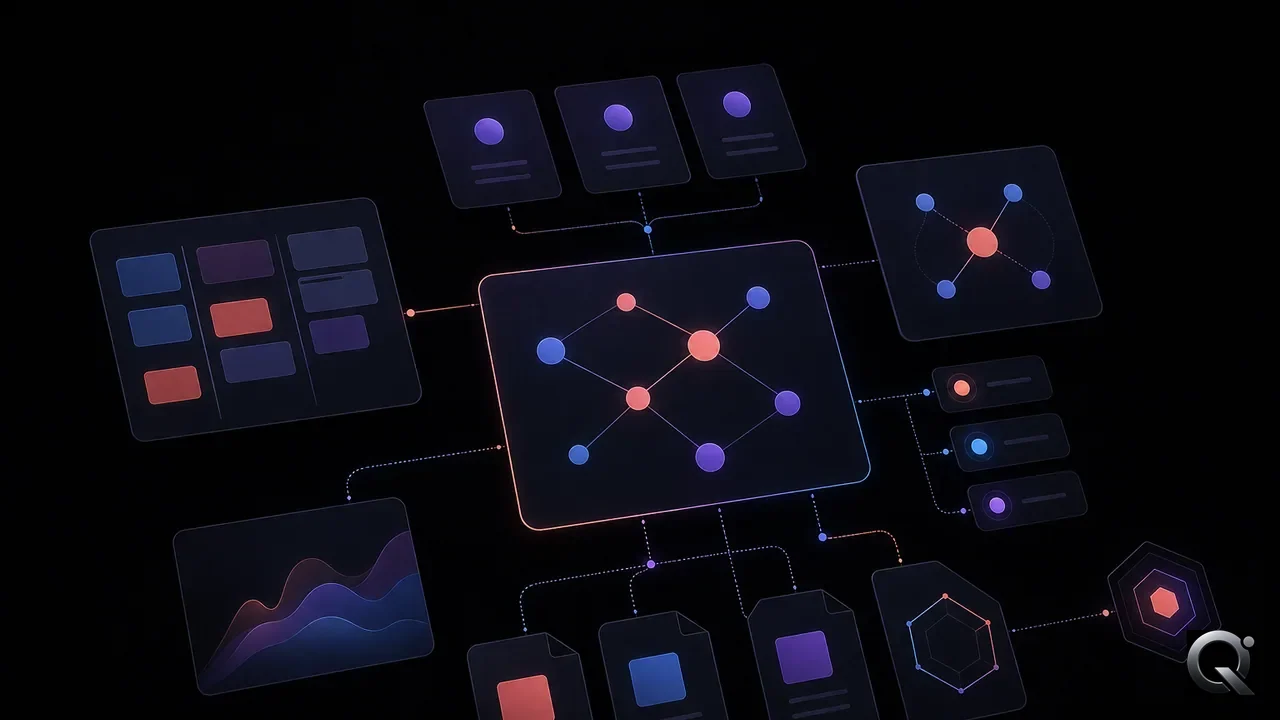
These elements do not need separate documents. A shared project canvas, delivery record, or structured workspace can hold them together. What matters is that the current record distinguishes approved instructions from open questions and superseded material. An implementation team can then act on the active context without treating every comment as a requirement.

Start with the outcome and the scope boundary
The outcome states the user change or business result the work must deliver. It should name the person or workflow affected and the observable result, rather than relying on a broad feature label. “Improve onboarding” describes an intention. A statement that identifies the user action and the condition it must support gives implementation a decision it can test.
The scope boundary states what the work includes and what it excludes. It prevents adjacent ideas from becoming unplanned requirements once work begins. Record the pages, flows, components, data, content, integrations, or review responsibilities that are in scope when they are known. Record an open question when that boundary has not been decided.
A boundary is especially important for AI teammates because a generative system can produce a plausible answer beyond the requested area. Clear exclusions make the correct stopping point visible. They also give a reviewer a way to identify a change that is technically polished but outside the approved delivery.

Make source material authoritative and traceable
Source material is useful only when the team can tell which version governs the work. Link the approved brief, design reference, requirement, policy, technical constraint, or example that an implementer needs. Name a replacement when a source no longer applies, rather than leaving several similar files with no indication of which one is current.
Do not copy long source text into every task. Copies diverge and create extra maintenance. Keep a primary record with stable links, then attach the specific sources needed for a bounded task. The record should state whether each source is approved, pending review, or superseded, so an AI agent does not convert a draft idea into product behavior.
The article How do AI agents share project context when building one app? explains why a shared record works better than disconnected private summaries. The critical point is traceability: a reviewer should be able to move from a generated result back to the input that governed it.
Record decisions as rules that implementation can follow
A decision record should state the chosen direction, the reason it was chosen, the boundary of that choice, and the condition that would cause a review. This turns a meeting conclusion into a rule an implementer can apply. It also makes clear whether a statement is settled context or merely an option still under discussion.
Write the decision in concrete language. “Use a review gate before production changes” needs its operating boundary: which changes require review, what evidence is required, and what happens when the evidence does not match the expected result. The extra detail is not bureaucracy. It is the information that prevents different contributors from implementing different versions of the same instruction.
Link each significant decision to the work it affects. That link may point to a requirement, design, task, code change, test, preview, or approval. A decision without an implementation path is easy to forget, while a task without a decision reference can drift from the intended outcome.

For a method of maintaining those records after the project starts, see How Does AI Documentation Keep Decisions Current?. A current decision record names the active rule and identifies the work that needs another review when the rule changes.
Map dependencies before people or agents work in parallel
Dependencies show which decision, asset, interface, data shape, or approval must exist before a task can be completed. They turn hidden sequencing into a visible delivery constraint. A task that depends on an unresolved data model or an unapproved flow should be marked accordingly, not treated as independent work.
Map only dependencies that change the next action. A useful dependency entry identifies the upstream item, the affected task, and the consequence if the upstream item changes. This is enough for a developer or AI agent to know whether to proceed, ask a question, or return a blocked result.
Parallel work becomes safer when each contributor receives the context that governs its task and a link to upstream decisions. Not every agent needs the full project archive. Each one needs the active constraints, authoritative sources, and acceptance criteria for its boundary, plus a route to inspect related context when the task crosses another area.
Define acceptance evidence before the build begins
Acceptance evidence defines how the team will know the delivered result matches the documented outcome. It can be a rendered page state, a test result, a reviewed preview, an approval record, or a live verification. The evidence should describe the observable result, not merely the activity performed.
A code change alone proves that files changed. It does not prove that a visitor receives the intended experience, that a workflow handles its important state, or that an operational requirement was met. Documenting the acceptance evidence early makes review more precise because reviewers can compare the result with an agreed condition instead of relying on memory.
The guide How Does an AI Website Builder Turn a Brief Into a Build? shows how a defined outcome, constraints, and acceptance conditions turn a brief into reviewable implementation work. The same principle applies whether the delivery is a website, a web app, or a smaller product change.
Use a short review procedure before implementation
A pre-implementation review checks that the documentation can guide a real delivery decision. It is not an editorial pass for style. The reviewer should look for ambiguity that would make two reasonable implementers build different things, or for missing evidence that would make acceptance subjective.
- Confirm the outcome. State the user action or product result the work must support.
- Confirm the scope boundary. Identify what the task includes, what it excludes, and what remains open.
- Check sources. Mark the brief, designs, requirements, and constraints that are authoritative now.
- Read every decision as an instruction. Add a boundary or review condition where a contributor could interpret it differently.
- Map material dependencies. Identify the upstream choices, assets, or approvals that affect the task.
- Define acceptance evidence. State what a reviewer will inspect before the result is accepted.
- Assign a change path. Specify where later updates will be recorded and how affected work will be identified.
Keep the record current without turning it into an archive
AI documentation remains useful when it has one primary location and a clear way to show what changed. When a requirement moves, update the active decision, record the reason, identify affected tasks and evidence, and mark earlier instructions as superseded. This preserves the history needed for review without asking each contributor to infer which note is still valid.
Separate the delivery record from execution notes. A work log can contain temporary investigation, commands, or review comments. The documentation that guides future work should retain the outcome, boundaries, decisions, sources, dependencies, and acceptance evidence that must be reused. That separation keeps the record small enough to read and reliable enough to act on.
Frequently asked questions
Is AI documentation the same as a project brief?
No. A project brief establishes the initial outcome, audience and scope, plus constraints. AI documentation carries the decisions, sources, dependencies, and acceptance evidence that keep implementation aligned after the brief has been interpreted and reviewed, plus changed.
How detailed should AI documentation be before implementation?
It should contain enough detail to make the next delivery decision repeatable. Include information that changes what an implementer builds, leaves unchanged, or proves at review. Leave out narrative that does not affect a product, technical, or acceptance decision.
What should happen when an AI agent finds an unresolved question?
The agent should identify the unresolved question and stop short of inventing a product choice. The delivery record should keep open questions separate from approved decisions, then link the eventual answer to the tasks and acceptance evidence that depend on it.